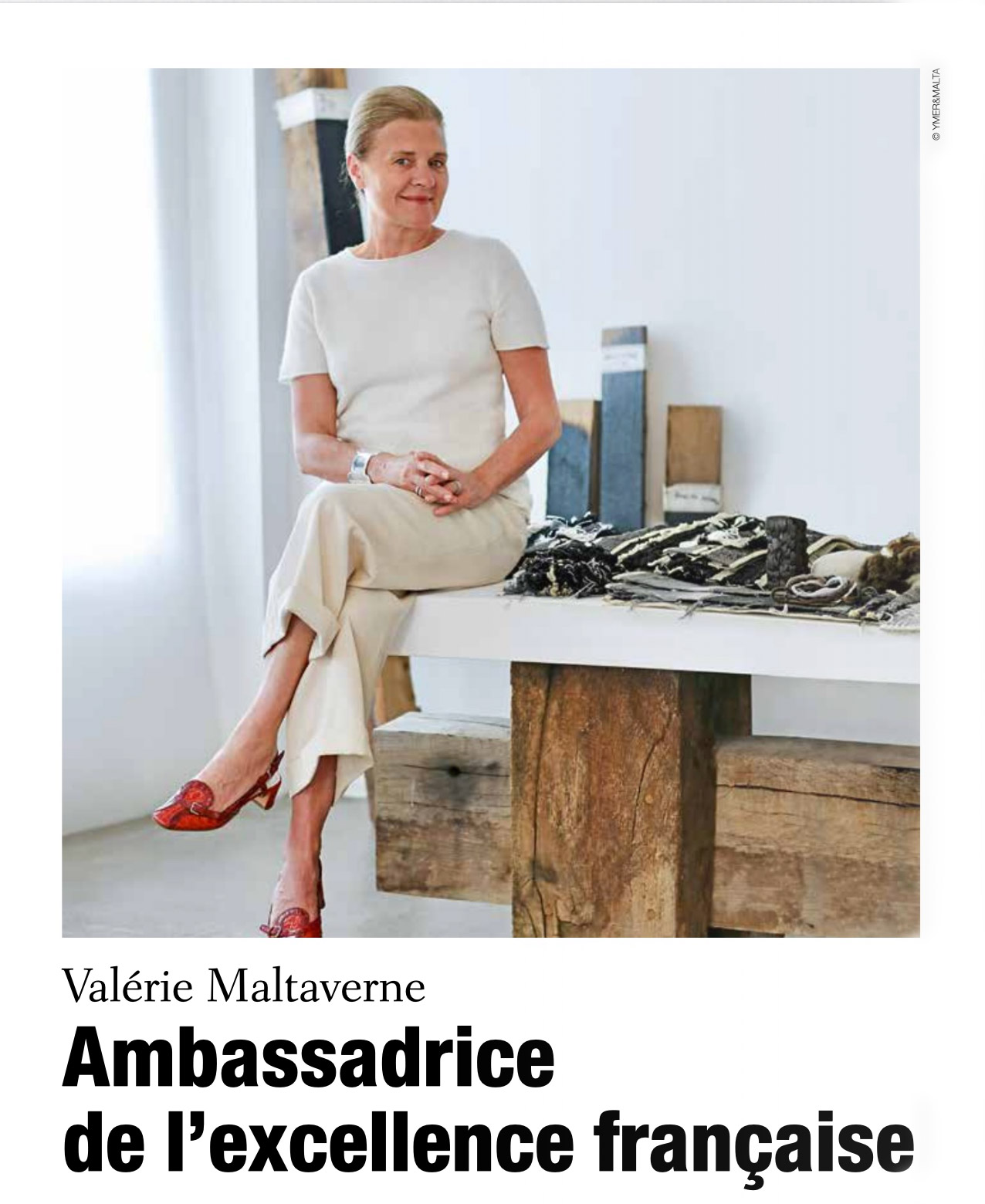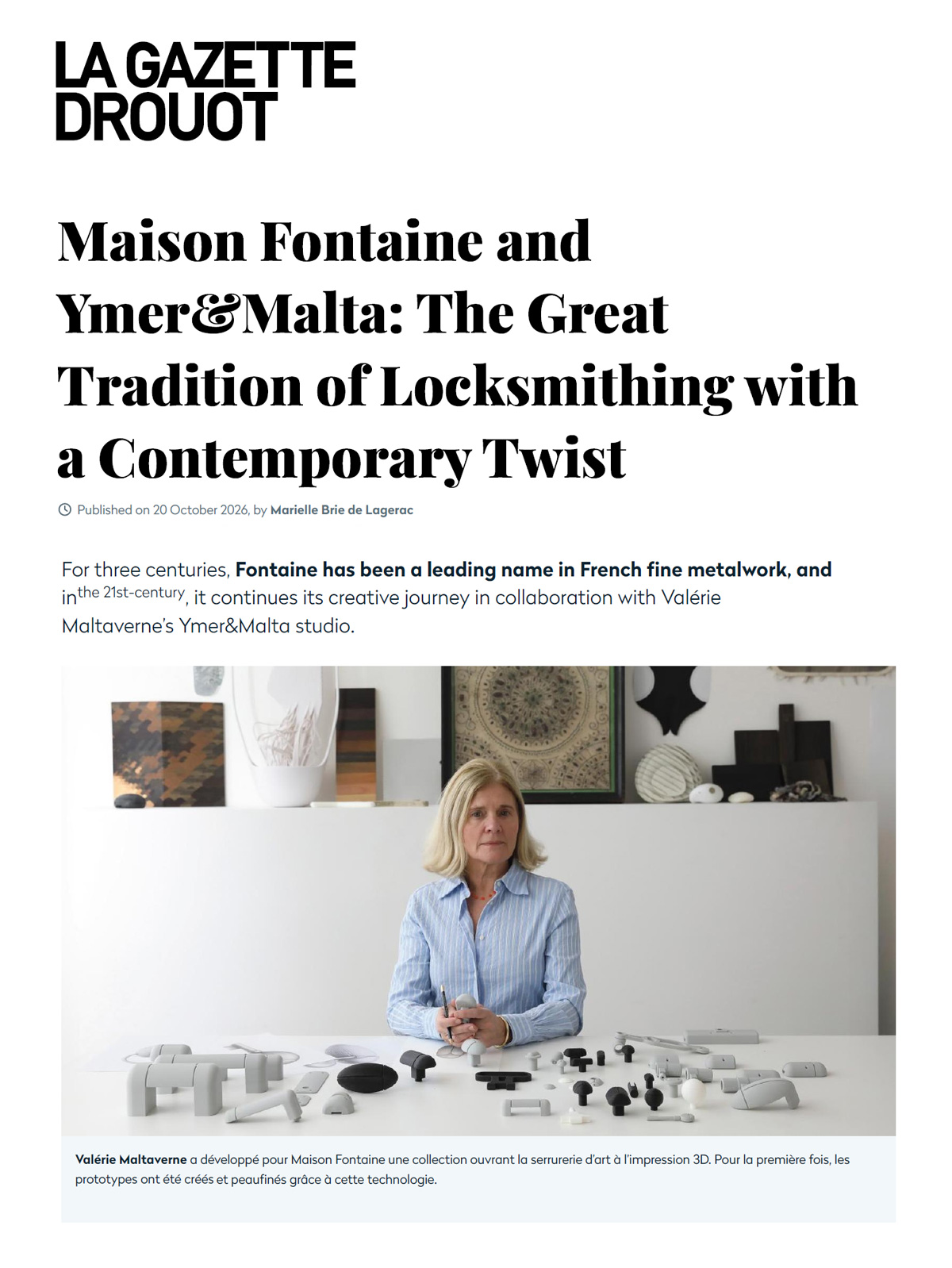
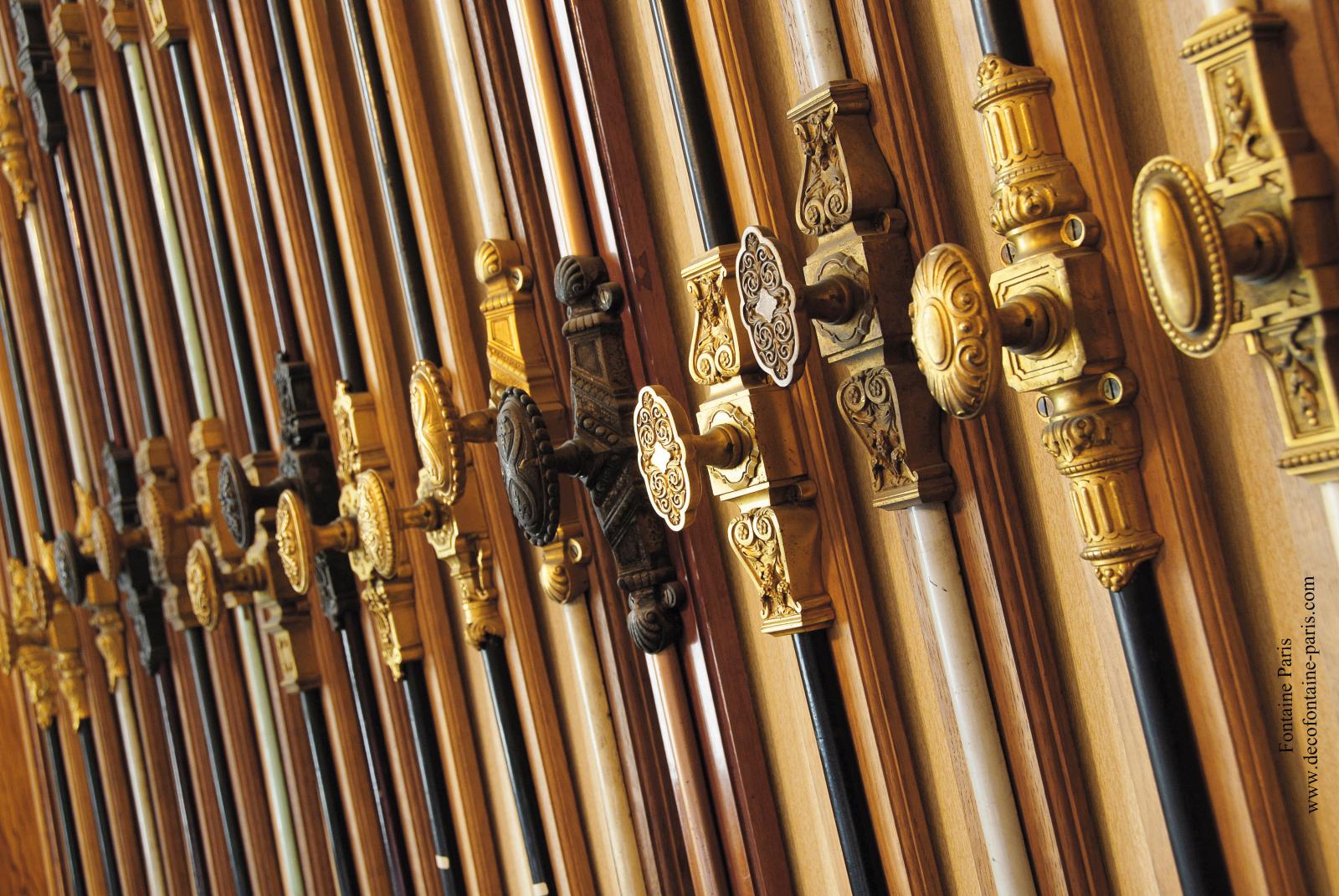
Every metalwork piece crafted by Maison Fontaine embodies the legacy of centuries-old craftsmanship. The workshops located in Saint-Blimont, in the Vimeu region of Picardy, carry on an ancient locksmithing tradition that once kept farmers busy during the winter, before being further developed by Colbert inthe 17th-century. Today, Maison Fontaine employs artisan craftsmen year-round to preserve these skills. With a catalog of approximately 30,000molds—the oldestdatingback tothe1740s— this institution tasks its own design office with adapting the historic cast pieces to contemporary interiors and developing new creations, which are cast using the lost-wax method. In 1982, Maison Fontaine left the fold of the eponymous family to join that of Henri Morel, CEO of the Dény Security group. While ownership has changed hands, the spirit of the house remains one of the most precious assets of its heritage. Furthermore, the collaboration between Antoine Douville, deputy general manager of Maison Fontaine, and Valérie Maltaverne, creative director and founder of the Ymer&Malta studio, has opened a new chapter in contemporary design. Following her “The Great Lady” collection, which radically reimagined Aubusson tapestry, Valérie Maltaverne has now offered a contemporary reinterpretation of artistic metalwork. The technical and ornamental repertoire of the twenty-eight pieces created—including buttons, door handles, lock plates, and a door knocker—is embodied in the streamlined silhouette of a scarab beetle. Its Egyptian-inspired lines are reborn in the minimalist design of the elytra, while its metallic body is adorned with nine patinas ranging from gold to medal bronze.
© Maison Fontaine
A Dialogue Between Past and Present
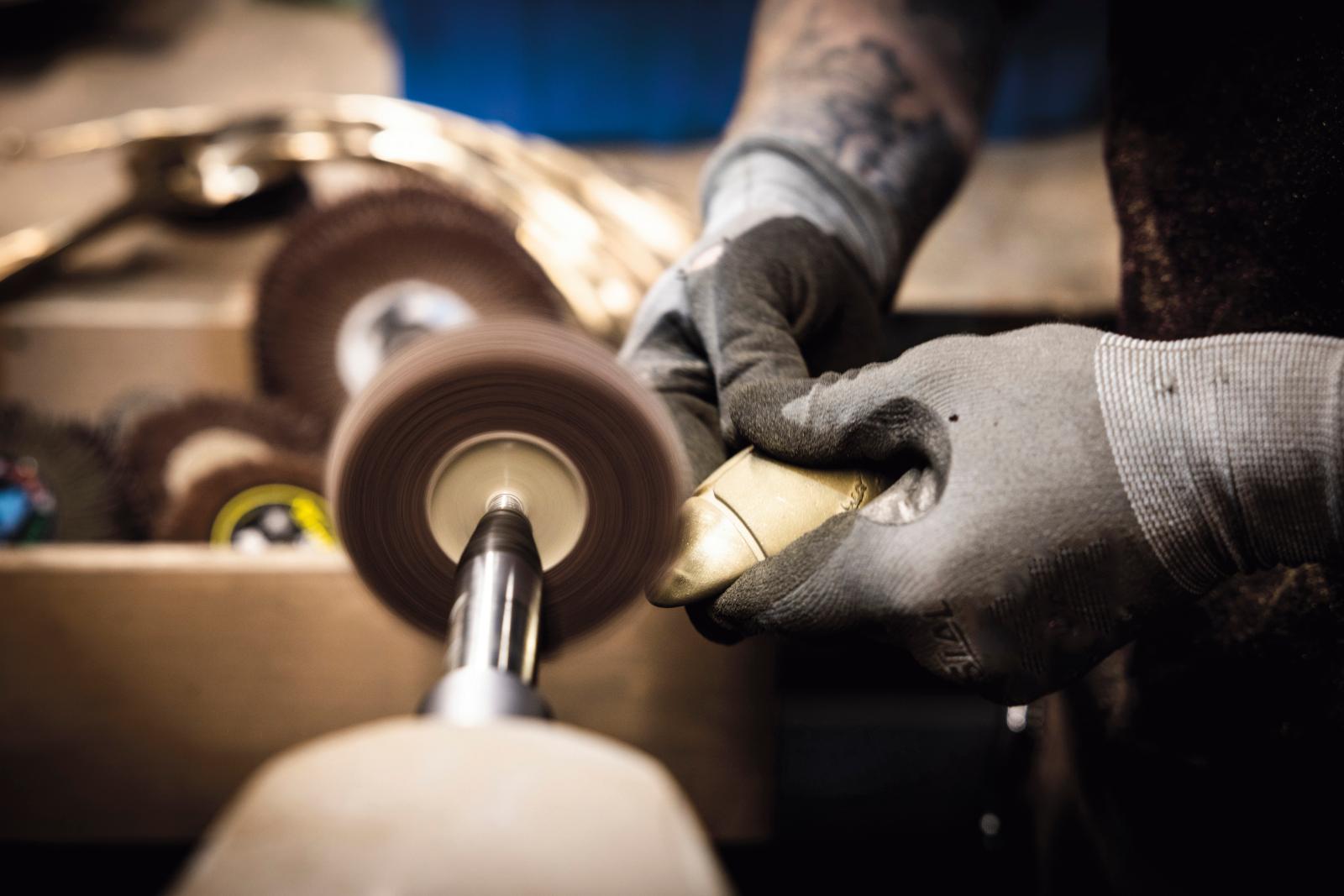
For the first time, Maison Fontaine used3Dprintingto design its prototypes. This new tool allowed the team to refine every piece in the new collection, particularly in defining the irregular grooves on the door knocker and its knob, as a tribute to handcrafted work. The artisanal production process, however,remains unchanged: using the model mold, art foundry workers cast brass to create a rough-cast piece. Turners smooth the surfaces and prepare the various components before assembly. Next come the engravers, who are responsible for refining the delicate reliefs of the design. Finally, the polishing stage enhances the metal, which receives a finish tailored to the customer’s request. Patina, gilding, lacquer—almost any finish is possible. The assembly of all the components concludes this painstaking process and allows for verification of the piece’s alignment, quality, and proper functioning. The company thus carries on the traditions of a discreet craft—often overlooked, yet essential to the refinement of interiors. Playing on the contrast between polished surfaces and raw materials, the beetle designed by Valérie Maltaverne seems to settle naturally on doors and windows, breathing new life into the tradition upheld by Maison Fontaine. With this collection, one of Europe’s oldest artistic locksmith shops throws its doors wide open tothe21st-centuryworld. In the1840s, Joseph Fontaine and his cousin François took overa business founded exactly acentury earlier, in 1740, by a certain Mr. Lavollée. Virtually nothing is known about him, except that his business supplied artistic ironwork, from espagnolette locks to keys, and all manner of wrought metal pieces. The business taken over by the two young partners also included antique molds, which opened the doors to the most beautiful châteaux and mansions in Paris and its surroundings. For, in themid-19th-century, bourgeois construction projects and the restoration of former royal estates were on the rise, demanding—in a France experiencing a full-blown economic boom—only the very best and most beautiful. At the same time, the two cousins created designs in keeping with the spirit of the times and were thus selected to supply the major Parisian train stations. Maison Fontaine quickly became a leader in its field and prospered handsomely. In the1860s, the cousins acquired a building on Rue Saint-Honoré, part of which still houses the showroom, now facing Rue de Rivoli. However, this decade saw François step away from the business, and Joseph passed away from illness at the age of44. His widow, née Ferté, and one of her relatives named Vaillant took over the business on an interim basis for ten years, during which time Maison Fontaine worked on projects at Chenonceau, the Opéra, and Paris City Hall. When Joseph’s son, Henri, took over the company in 1889, it employed 80workers and enjoyed a solid reputation. Together with his brother Lucien, he expanded the business, opened a workshop in Boulogne-sur-Seine, established trading posts in Tonkin and China, and acquired the Fromentin company, which specialized in everyday hardware. A close friend of Antoine Bourdelle, he socialized with Aristide Maillol, Auguste Rodin, and Camille Claudel.As for his younger brother Arthur, a graduate of the École Polytechnique and the École des Mines, he moved in the circles of the Parisian intelligentsia. At his home, Maurice Denis displayed embroidery cartoons and painted Marie Fontaine, his wife, who was also sketched by Odilon Redon and Édouard Vuillard. Within this bourgeois circle, firmly embedded in the capital’s pioneering artistic networks, this spirit of emulation instilled in the Fontaine household a taste for the avant-garde and, with it, the emergence of a new family tradition.
© Maison Fontaine
The Shift Toward Modernity
As Art Nouveau emerged, Henri Fontaine was among the first to embrace this stylistic evolution. Working alongside Hector Guimard, he undertook his first collaboration with a renowned architect, who nevertheless retained full ownership of the molds. Several pieces created for the Castel Béranger can be admired at the Musée d’Orsay, while we await the opening of the future Guimard Museum in the Hôtel Mezzara in Paris. Through a series of World’s Fairs and awards, Maison Fontaine established itself as an innovative company, committed to passing on traditional craftsmanship and renewing it in the face of industrialization—or in tandem with it. Thus, at the 1925 International Exhibition of Decorative Arts, it presented “utility objects” and pieces that were “purely decorative, even bordering on large-scale sculpture.” All were designed by figures who would go down in history. This time, it was Henri-Jean Fontaine, Arthur’s son, who brought together, in the first category, works by Süe and Mare, André Prou, Gaston Le Bourgeois, and André Groult, soon followed by Ruhlmann and Puiforcat. The second category features four door knockers signed by Antoine Bourdelle, Aristide Maillol, Joseph Bernard, and Paul Jouve, which attest to the company’s artistic ambition. The challenge of the luxury liner market was taken up by Renan de la Godelinais, a student and collaborator of Ruhlmann, who designed locks for transatlantic liners for Maison Fontaine. The company then established branches in New York, followed by Buenos Aires. At the same time, it continued to produce pieces in the great historical French styles for luxury hotels (from the Crillon to the Bristol and the Cap-Eden-Roc), former royal estates—both public and private—such as Versailles and Louveciennes, and private clients around the world. A blend of tradition and modernity that continues to this day.
For more information
Tel.: 01 42 61 51 53
www.decofontaine-paris.com
Visit